
Sent by David Kerr Direct replies to this email can only be seen by admins.
|






























- You are here:
-
Home

- Friday Memo from Bishop Boyea
-
Border Patrol Halts Multiple Human Smuggling Operations
PJ Media Apr 25, 2026 | 18:50 pm
Read more... -
Does Your Name Determine Your Destiny? In Muhammad Jihad Kelly’s Case, Maybe So
PJ Media Apr 25, 2026 | 18:46 pm
Read more... -
Glenn Beck drops 20 brutal proofs Canada is no longer a free nation
Blaze Media Apr 25, 2026 | 18:00 pm
Read more... In a truly free nation, 10 things must be present, says Glenn Beck: “rule of law,” “free, fair, and regular elections,” “protection of individual rights,” “separation of powers,” “independent judiciary,” “a free press and open information,” “civilian control of the[…]
 -
Robot slot machine chasing Vegas gamblers down has people worried 'The Twilight Zone' is coming true
Blaze Media Apr 25, 2026 | 16:30 pm
Read more... A viral video of a Las Vegas slot machine has viewers concerned that yet another old piece of media has predicted the future.Typically, "The Simpsons" is the most-cited show known for its eerily accurate depictions of future events, but in[…]
 -
President Trump Gives ‘Shoot to Kill’ Order on Iranian Minelayers in Strait
Geller Report Apr 25, 2026 | 11:51 amOorah.
Read more... -
VA Gerrymander Language Is So Dishonest, Dems Refuse To Defend It In Court
The Federalist Apr 24, 2026 | 20:28 pm
Read more... 'If the language were defensible, [Jay Jones] would have defended it. A lawyer who believes in his ballot question quotes his ballot question.'
 -
Exclusive: New Bill Would Ban All Trans Disfigurements For Kids And Let Victims Sue Over ‘Child Abuse’
The Federalist Apr 24, 2026 | 19:38 pm
Read more... 'These are not medical treatments — they are child abuse.'
 -
Mamdani will VETO NYC schools ‘buffer zone’ bill — he’s determined to protect anti-ICE, pro-Hamas student protesters
Geller Report Apr 24, 2026 | 18:00 pmMamdani wants to make sure that patriotic Americans who support ICE, and oppose the jihad against Israel, will be terrorized as much as possible in his New York City. He doesn’t want to allow them to have any place where[…]
Read more... -
One Day in the Life of Ann
Ann Coulter Apr 16, 2026 | 14:00 pmI’ve been trying to distract myself from the end of the world, as Trump blows up not only Iran but the Republican Party with a pointless war that has spiked oil prices, depleted our munitions, closed the Strait of Hormuz,[…]
Read more... -
TWO WONGS DON’T MAKE A RIGHT
Ann Coulter Apr 9, 2026 | 10:59 amPresident Trump’s executive order denying citizenship to “anchor babies” has caused quite a stir. The media insist that kids born to illegal aliens on U.S. soil are automatic citizens at birth. Although asserted with smug arrogance, they then bury any[…]
Read more... -
President Trump Announces Plan to Allow 600,000 Chinese Students Into US Universities
Turning Point USA Aug 27, 2025 | 21:00 pm
Read more... -
Trump, Hegseth Seek Name Change for the US Department of Defense
Turning Point USA Aug 27, 2025 | 19:00 pm
Read more...

Consider
"Of all tyrannies, a tyranny sincerely exercised for the good of its victims may be the most oppressive. It would be better to live under robber barons than under omnipotent moral busybodies. The robber baron's cruelty may sometimes sleep, his cupidity may at some point be satiated; but those who torment us for our own good will torment us without end for they do so with the approval of their own conscience. "—C. S. Lewis
MAB
-
February 2024
- Tucker Carlson - Uncensored: The Vaccine Interview - How much damage have the COVID vaccines caused? (61917)
- What happened to Barack Obama? - Tucker Carlson (60606)
- TCN - The Tucker Carlson Encounter: Xi Van Fleet - The George Floyd summer put America in uncharted territory (57868)
- Uncensored: Eithan Haim - One doctor is exposing a secret transgender program - Tucker Carlson (60504)
- The Tucker Carlson Encounter: Tyranny in Brazil (60964)
-
March 2024
- Uncensored: The J6 Pipe Bombs - Tucker Carlson (59320)
- TCN - Uncensored: The End of America - Illegal immigrants in the military? (59497)
- Epoch Times - House Judiciary Panel Report Exposes Massive Government Surveillance of Americans’ Financial Data (56609)
- Tucker Carlson Uncensored: 11 Years in Prison for Praying • Published Mar 26, 2024 • 17 mins (61335)
-
September 2024
The Revelation Project - TRAILER | THE BOOK OF REVELATION | AUDIO BIBLE WITH SUBTITLES - John G. Elliott
Devotional
- “From HIM Through Me” - Linda Behr-Croll (NEW) (3561)
- A. W. Tozer (Audio Book) (5064)
- Billy Graham Devotional (4818)
- Oswald Chambers (3854)
- Revelation Project - John G. Elliott (3955)
- Tozer Bible Verse (3921)
Prayer
- CITY-BY-CITY.ORG (4733)
- DUTCH SHEETS - GIVE HIM 15 (15165)
- Lance Wallnau-What are we to make of the President in the hospital? My thoughts and moment to pray.. (9587)
- PRAYER FOR WICKED AND EVIL POLITICIANS - JAMIE ROHRBAUGH, IFA CONTRIBUTING WRITER (6550)
- SCIENTISTS VOTE TO “GROW BABIES” AND KILL FOR RESEARCH USE (4634)
- The "Unforgivable" Sin | Most People Don't Even Realize They Are Committing It (2665)
- Week #29 - WOE TO THE WICKED - City-by-City - Karen Hardin (5392)
Sermons
- The Personalty of the Holy Spirit - Spurgeon (6047)
- Why I Believe Jesus - Zacharias (6434)
- Life of Inspiration - Mullins (5649)
- Feeding Sheep or Amusing Goats - Spurgeon (4287)
- Spurgeon Gems (4878)
- The Baptism of the Holy Ghost Part 1 - John G. Lake (1921) (4836)
- The Baptism of the Holy Ghost Part 2 - John G. Lake (1921) (5964)
- THE DOMINION OF PROVIDENCE OVER THE PASSIONS OF MEN - WITHERSPOON (5641)
- Fr. Altier - The Year End Sermon - Powerful - End of Silence from the Pulpit (4633)
- Fr. Altman - Fatima Warnings: Dark, Darker & Darkest Times Which Will Be Coming In Our Time S. V.024 (4984)
- Facing the Wind - Spurgeon (4736)
- Sex, Power, Riches and Materialism | Billy Graham Classics (4672)
- The Goodness and Severity of the Lord - Mike Bickle (6651)
- Get on Offense -- Coach Tom Mullins (4659)
- INTIMACY WITH GOD - MIKE BICKLE (6900)
- The Story of the 1904–1905 Welsh Revival (2) (4346)
- Robin D Bullock Prophecy - Man's Relationship to God (6100)
- Pr Pavel Goia - "The Battle Belongs to the Lord" - SA Big Camp - 21st Apr 2018 (5186)
- Lead Us Not Into Temptation - Spurgeon (4728)
- Big Trouble Ahead [Let's Be Ready] - World Outeach Church - Pastor Allen Jackson (4866)
- The Secret of Loving God! - Charles Spurgeon Sermons (4542)
- Sin Willfully, No More Sacrifice - A. W. Tozer Audio Sermon / Hebrews 10:26 (4275)
- Let Not Your Heart Be Troubled - Comforting Charles Spurgeon Sermon (3923)
- The Saint Must Walk Alone - A. W. Tozer / Classic Christian Audio Books (4238)
- The War in Your Head - Bill Johnson (Full Sermon) | Bethel Church (4772)
Books
Founders - Historical Links
Politics










































Politics of Corruption
- Russian Army Recruit Ad vs American Army Recruit Ad
- DOCS TRIED TO KILL UNVAXXED, COULD FACE CRIMINAL CHARGES: SHERIFF MUST DECIDE
- Vaccine Patents to Track Who You Associate with, When You Go To Church And Your Social Credit Score (3)
- Papadopoulos Doubles Down on Durham: "Massive Conspiracy"
- INVESTIGATION: Hunter Biden Had Tentacles In Dark Corners Of the World Far Beyond China, Ukraine
Politics of Racism
- Mel Welcomes back Extraordinary Fearless Documentary Film Maker Joel Gilbert 12-18-21
- More Left-Wing Lunacy - University of Michigan's 'Words Matter Task Force' says the words 'picnic' and 'brown bag' are offensive
- Greatness - Overcoming the Fake Racial Narrative One Lick at a Time...
- Why We Should Never Apologize for our Race - Good Patriot
- George Floyd is not my martyr; he can be yours- Candace Owens
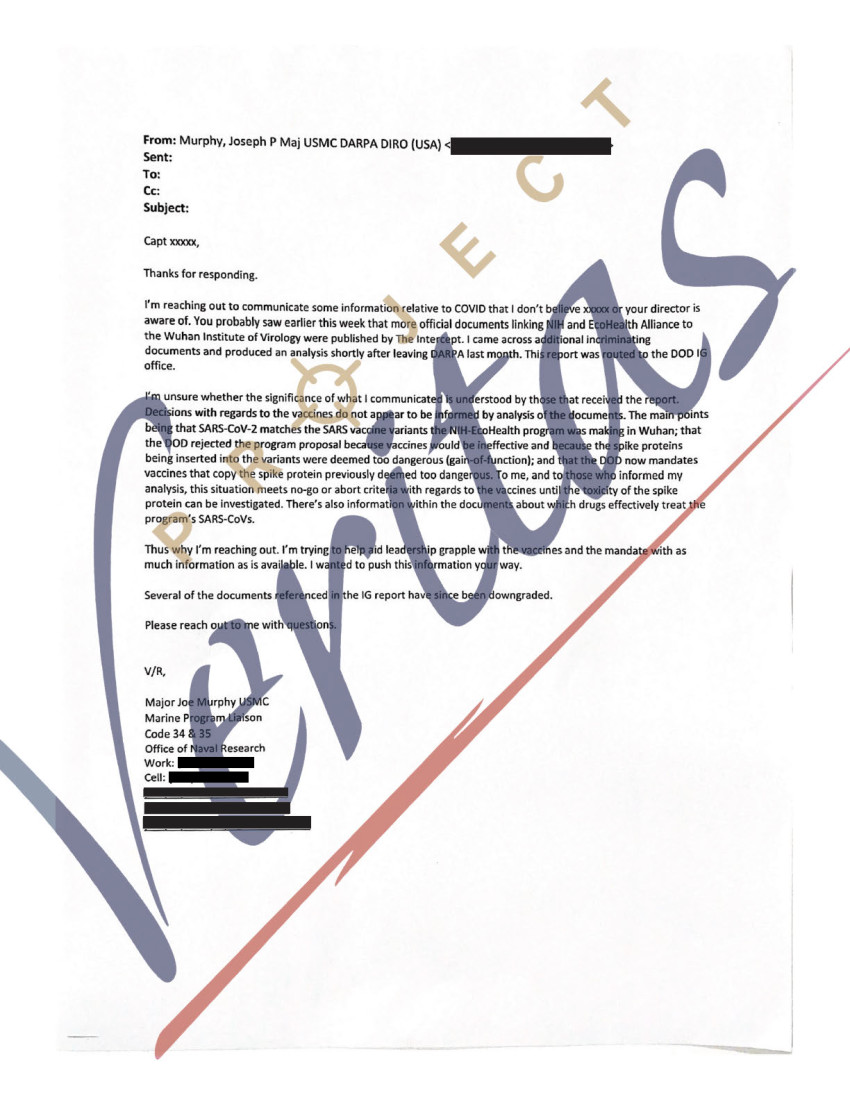
Smoking Gun 34-35 or False Flag?
Project Veritas
DOD/DARPA SARS CoV-2 Documents

GAME OVER - DINESH D'SOUZA - VIDEO OF MULES TRAFFICKING BALLOTS

What Say Ye?

Scenarios for the Future of Technology and International Development
The ROCKEFELLER FOUNDATION